
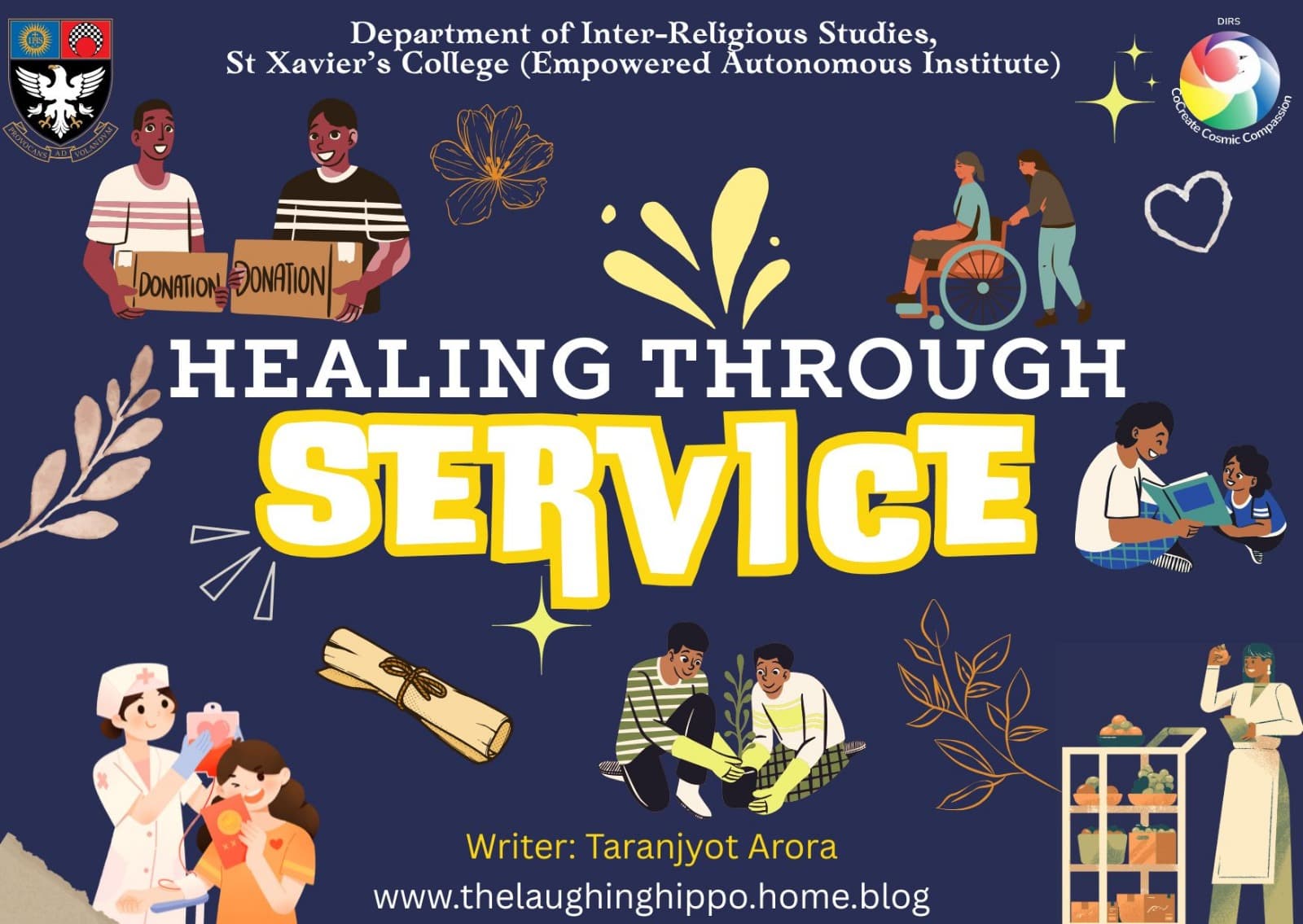
Healing Through Service
“Being of service to others is what brings true happiness.”
-Marie Osmond
All of us lose our way from time to time. Out at sea, when the night is plunged in darkness, and we are powerless to the wind, where do we go? A lighthouse is a beacon of hope for adrift sailors; a tall tower whose light parts through the darkness and illuminates the sailors’ path. With this in mind, we bring to you the Lighthouse Series, where every blog explores a different perspective on the lighthouse concept through a different lens. The first blog delves into service as the lighthouse that draws from the inner light of selflessness and emits it outwards, for it to shine upon and strengthen the light of other lighthouses.
What do we mean by ‘service’? Is it when someone serves us food at a restaurant? Or when we receive high-quality treatment at a hospital? Or when an employee works tirelessly for a company? These are all meaningful forms of service, often carried out with care, skill, and commitment. Yet, we sometimes limit the understanding of service to tasks and transactions. At its core, service extends beyond roles or remuneration; it reflects an inner orientation toward care and responsibility for others. When a person supports others without expectation, the focus shifts from the self to the other. This shift gently loosens the ego’s hold, allowing a deeper human connection to emerge.
By helping others, we give ourselves a chance to experience communion, which we may not always strive to build with each other. Simple acts of service unite us in the shared pursuit of universal well-being. Especially in today’s times, when loneliness hides behind constant online connectedness, serving others becomes a valuable way to stitch us back into a meaningful social fabric.

Monica Garwood; Pinterest
In Sanskrit, the word ‘seva’ translates to ‘selfless service.’ It is revered as one of the sacred pillars of spiritual living. Through seva, one submits to ideals of altruism, which not only enables one to connect with others but, most importantly, helps reconnect with oneself. It allows us to uncover our inner goodness and transcend worldly confines to reach our authentic selves. It serves as a reminder that beneath the layers of greed, fear, and indifference lies a compassionate, tender being capable of immense care. Seva can manifest in various ways. It can look like helping a neighbour by lending groceries or donating money for refugee resettlement funds. Nevertheless, it is important to note that service is not limited to material giving; seva can mean offering time, skill, service, or even using one’s voice for social justice and collective development.
The spiritual significance of service makes it a cornerstone across religions. While each faith may employ a different understanding of seva, its underlying purpose is common: to express devotion to God through selfless action. Seva has been regarded as a way of moving closer to the Divine for centuries, as it allows individuals to transcend ego and act from a place of humility and love. When service is offered without expectation, the individual becomes a channel through which Divine Compassion flows into the world. In this sense, seva is not merely an external act, but an inner spiritual practice that fosters union between the self, humanity, and God.
Let us look at how seva is practised in different faiths:
In Sikhism, seva is expressed through the understanding of tan (physical service), man (mental service) and dhan (financial service). It is practised through communal kitchens (langar), which signify equality, by cleaning the gurudwara, feeding people, and helping strangers. Seva, in Sikhism, is a direct path to unity and humility. The institutionalisation of seva took place to dismantle social hierarchies and ritualistic elitism, emphasising equality and shared responsibility as essential to spiritual growth.
In Christianity, service is rooted in the commandment “love thy neighbour.” Service is viewed as a moral duty, grounded in the Christian virtue caritas, that exhibits solidarity by recognising the presence of God in every person. It is a way to uphold the teachings of Jesus, who embodied selflessness by washing his disciples’ feet and sacrificing his life on the cross. Jesus’acts of service were meant to demonstrate that true devotion lies in humility, love and self-giving.
Islam displays service through zakat (mandatory charity) and sadaqah (voluntary charity). These practices ensure economic flow within the community and encourage empathy and compassion. Helping the poor, supporting widows and orphans, and contributing resources during hardships are part of Khidmah, an Arabic term that denotes the general concept of service or devotion.
Buddhism understands service through the idea of universal compassion (karuna) and loving-kindness (metta). By helping others, one can reduce one’s personal suffering through diminishing attachment to self. Gautam Buddha emphasised compassion because suffering was seen as universal, and its alleviation was essential to spiritual liberation. Monks and practitioners often engage in community service, teaching, and acts of generosity (dana), through which service becomes a practice of mindfulness and a means of soothing pain.
In Jainism, the concept of service is intertwined with ahimsa (non-violence) towards all living beings. Selfless acts of care, protection and charity towards vulnerable beings are central to spiritual merit and communal harmony. These acts represent the purity of intention and help cultivate virtues such as empathy and humility.
Religious traditions place service at the heart of faith because spirituality, when divorced from compassion, is seen as incomplete. Modern psychology supports the teachings of spiritual traditions, which hold that service benefits both the giver and the receiver. It increases empathy, reduces stress, enhances life satisfaction and builds self-esteem. It shifts attention away from self-focused rumination and promotes emotional balance. Even small acts of kindness activate regions of the brain linked to pleasure and bonding, strengthening our sense of belonging and purpose in life. In this way, seva becomes both a psychological balm and a pathway to emotional well-being.
The beauty of seva is that it does not end with the individual who performs it. A single act of kindness often inspires another, creating a ripple effect that moves through families, communities and generations. This reminds us that every gesture, no matter how big or small, contributes to a larger cycle of goodness that shapes the moral fabric of society.
Seva has the power to break social, cultural, and economic divisions by creating a shared purpose that surpasses identity and status. Community kitchens, neighbourhood clean-ups, and inter-faith relief drives demonstrate how service nurtures trust, understanding and belonging. The simple, voluntary act of easing another’s suffering helps individuals and communities realise that they are part of something larger than themselves. In this manner, seva unites people and illuminates the world with compassion and love.
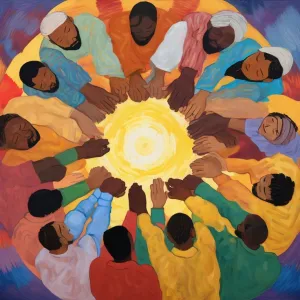
The shared light of service; Pinterest
Comments (0)
Sign in to leave a comment